 Sometimes, on the rare occasion, you see a film that pushes the boundaries of what one would think as being remotely possible in narrative storytelling. Recently, I witnessed a film that I had been eagerly anticipating since its explosive debut at the Sundance Film Festival earlier this year. That film was Josephine Decker’s Madeline’s Madeline, and I can truly attest to the reputation this film has as being an nightmarish experiment of contemporary independent filmmaking, a dizzying blend of images that make Madeline’s Madeline a powerful provocation of both form and content, and establishing Decker once and for all as one of independent cinema’s most exciting new voices – and not only someone whose vision isn’t merely welcome in the modern cinematic landscape – it is profoundly necessary, pivotal to the filmmaking process, with her daring narrative approach and her sheer audacity being remarkable indications that cinematic originality is most certainly possible. Madeline’s Madeline is one of the year’s most bold and daring films and something that will doubtlessly come to be seen as a monumental classic of experimental cinema. This kind of artistic bravery is rarely seen in the filmmaking medium nowadays, so to be privy to something as intrepid and unflinchingly bold as Madeline’s Madeline was an extraordinary experience, and one I won’t soon be forgetting.
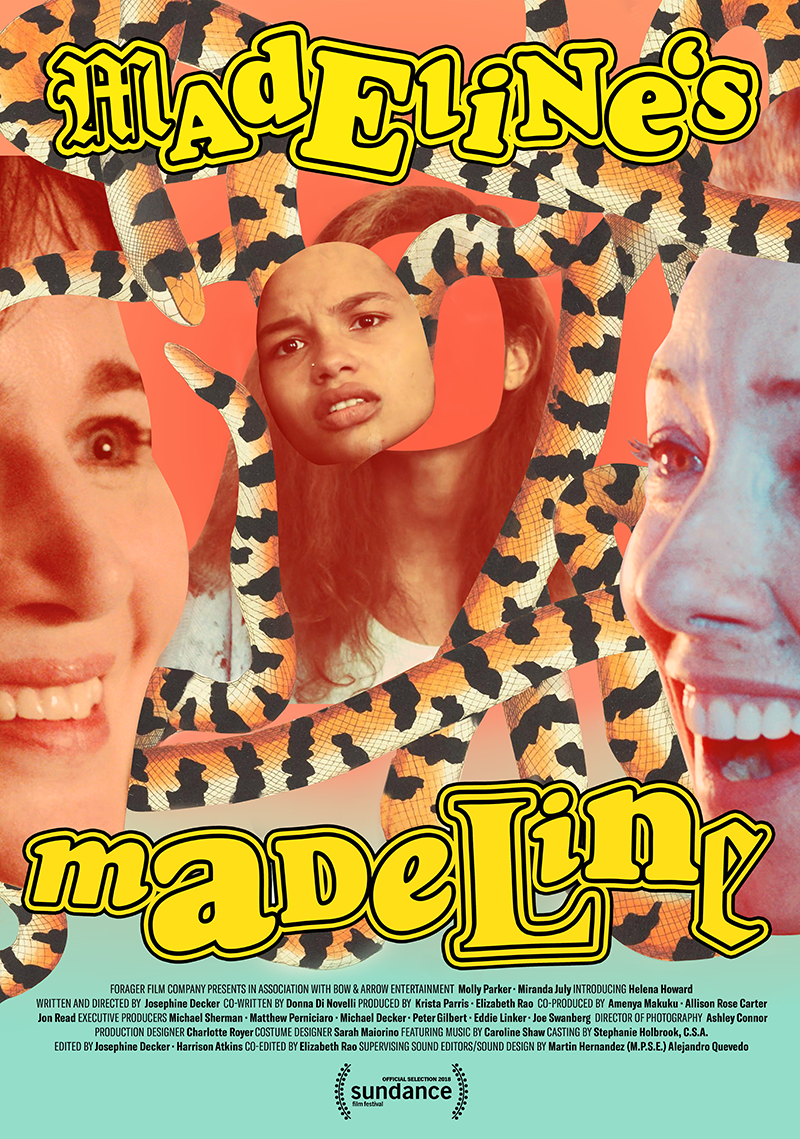
Madeline’s Madeline isn’t a coherent story as much as it is a series of moments in the life of the titular character, Madeline (Helena Howard), a teenage acting prodigy who is working alongside the visionary theatre director Evangeline (Molly Parker) in a series of workshops that double as rehearsals for some form of experimental theatre production that the fearless group of actors, led by Madeline, will be performing at some point. The quintessential method performer, Madeline often brings her performances home with her, much to the chagrin of her mother, Regina (Miranda July), who tries in vain to ensure her volatile daughter – who may or may not suffer from some form of severe mental illness – is taken care of, making sure she is nourished – physically, mentally and emotionally. However, how do we reconcile ourselves when our passions go too far, and they start to impinge upon our lives and the lives of those around us? How far is too far, exactly? And where exactly does fantasy end and reality start? These are the powerful questions Decker asks throughout Madeline’s Madeline – and she relishes in not giving definitive answers to any of them.
There is a great deal that can be said about Madeline’s Madeline, and it seems almost vulgar to write only a single review about this film – let alone to write a film review overall, because what this film demands is not some rambling thoughts about the story and how it was executed, but rather pondering pieces that unpack every detail of this mind-bending social odyssey. Discussions can be had about the limits between art and reality and the process of art intruding into one’s personal life, or about how Decker constructs this film as the story of three individual women, creating some form of feminist horror film, a film that looks at feminity through the lens of three very different women and their personal quandaries. Psychoanalytical studies can be done about the three central characters and their varying conditions, as well as their efforts to exist alongside one another despite their own individual insecurities, anxieties and deep-rooted fears. Madeline’s Madeline is not a film that can be reduced to a few lucid thoughts – and to do so would suggest that this is a film that actually makes sense, and while it is not entirely incoherent (Decker clearly respects her audience enough to give them some semblance of a story), this is a film that pushes the boundaries of narrative storytelling, and it challenges the audience to not only question this film and the entire industry that it represents, but to question more metaphysical concepts and to stimulate incendiary thought in the viewer, making Madeline’s Madeline one of most rebellious films I have ever seen – not only does it defy cinematic conventions, it arouses artistic insurrection in the audience, and as hyperbolic as it sounds, Madeline’s Madeline is a film that has the potential to change the way we look at cinema. If this hasn’t sold you already, then very little else will.
Decker’s inspirations throughout her career have been both overt and abstract – and Madeline’s Madeline is certainly not an exception. Her two previous films – Butter on the Latch and Thou Wast Mild and Lovely were heavily influenced by folk horror and the experimental conventions of her cinematic ancestors. Madeline’s Madeline seems to be drawn from innumerable preceding sources – at the outset, Jane Arden comes to mind through the feminist tone of the film, as well as how it approaches psychiatric issues and the concept of mental fragility in all three of the central characters. Narratively and visually, there are some parallels between Madeline’s Madeline and the films of two filmmakers who are held in extraordinarily high esteem. The first is Robert Altman, specifically his masterwork 3 Women, which was a bleak dosage of unhinged psychological despair, focusing on the trials and tribulations of three (?) women as they attempt to achieve their dreams and reach their impossibly-high aspirations. The second is David Lynch, specifically two of his films – Mulholland Drive and Inland Empire, both of which are about female performers who grapple with their identities for the sake of their art. I would be quite surprised if Decker didn’t draw some inspiration from these towering works, because I came away from Madeline’s Madeline in much the same mindset as I did with the aforementioned films – I was terrified, overcome with arid despair, which was only remedied through the overwhelming feeling of awe and wonder at having just witnessed something that tears away the well-constructed boundaries of narrative filmmaking, and replaces it with a heartwrenching brilliance, a fearless deconstruction of the conventional form. I have very little doubt that Madeline’s Madeline will not be seen as an imitation of these films, but rather stand alongside them as representations of surreal psychological mayhem.
Madeline’s Madeline is a powerful film, but its intention depends entirely on the performers entrusted with this very abstract story. The three leading actors in this film were all astonishing, with two of them being recognizable through their work as veterans of independent and arthouse cinema. Molly Parker brings a certain quiet intensity to her performance as Evangeline, a dedicated theatre director who takes her craft seriously, but manages to draw the line between reality and fantasy, if not for the sake of herself, for those around her. Miranda July, a renaissance women of contemporary indie cinema, is brilliant as the titular character’s mother, a paranoid and often smothering individual who hides her contempt for her daughter behind the facade of motherly care – we come to realize that Regina doesn’t fear for her daughter, she fears her daughter overall. July and Parker are brilliant (and the duality of their characters is quite remarkable), but it is the titular character and her interpretation that deserve the most acclaim – Madeline’s Madeline belongs entirely to Helena Howard, who turns in one of the year’s most impressive performances, and it is bolstered by the fact that she is a newcomer to the industry, with this film being her introduction into the world of cinema. There is something so beguiling about Howard in this film, and she captivates the audience from beginning to end, from the mystifying outset to the haunting ending, Howard commands the screen and brings a certain sinister energy that is beautifully harrowing and absolutely astonishing. This is a powerful introduction for an actress who clearly possesses a very definite set of skills, and she certainly has a future in the industry, because what she did in Madeline’s Madeline was beyond comprehension, and amongst the finest debut performances I have ever seen.
In all honesty, Madeline’s Madeline is a bit of a revelation – it is a psychoanalytical study of a young and broken individual and those in her life, and it explores her trials and tribulations as she navigates a hostile world. This is not the kind of story normally found in these kinds of abstract experimental films, but Decker transforms a tale of adolescent insecurity into something quite incredible. Beneath the very surreal execution, there is a powerful story about a young girl attempting to realize her dreams at any cost, and she finds herself losing her mind along the way – Madeline is one of the most complex cinematic characters of recent years, a potent case study for anyone interested in the psychological nuances of fictional characters. She is not a singular character, an independent figure – she is the embodiment of teenage angst, and the fearfulness a lot of us encounter in our youths, especially those who aspire to enter into the arts in some way. Decker subverts the traditional themes and presents them through the lens of an offbeat, often extremely unsettling experimental drama, never giving any direct answers to the multitudes of questions that arise throughout the course of her film. It is a film of highly-stylised and blatantly disturbing fragments that come together in controlled pandemonium to form a more complete whole, a haunting drama about one individual and her selfish quest to acclaim. Madeline’s Madeline is probably the closest we will ever get to an accurate cinematic representation of disassociation, and the approach to mental illness taken in this film may not be particularly heartwarming, but it is truthful, and that is certainly an aspect of Madeline’s Madeline that confirms this as a vital work.
Most interestingly, Madeline’s Madeline is a great portrayal of the artistic process, and it shows something not often depicted this clearly in these kinds of stories – the occurrence whereby an individual is so focused on their craft, the art begins to consume the artist. Madeline’s Madeline looks at the blurring of fiction and reality, with the opening lines of the film being the haunting assertion of “What you are experiencing is just a metaphor. The emotions you are having are not your own; they are someone else’s” – and this sets the tone for the film, which examines the psyche of a young woman who has become enveloped by performance, it impinges upon her life in every aspect, causing her to be a bundle of rage-filled neuroses and pretentions. It is a film that dares to question the sacrosanct nature of the acting world, and looks upon these individuals who take performance art far too seriously with a sense of irony that is neither bitter nor comedic – it is a surreal representation of the bleak absurdity that comes with these processes, and it devolves into something quite terrifying, especially in the final act, which can only be described as being both visual and narrative anarchy. It is critical without being mocking and constructs a truly compelling character in the titular anti-hero, who is almost impenetrably complex.
Madeline’s Madeline is something on an entirely different level than what one would expect, and while it does incite a certain persistent discomfort, it has a certain surreal charm that is only possible when it is coming from a place as demented as Decker’s own clear disdain for these kinds of performers who take themselves too seriously – and how else does one oppose this kind of artistic arrogance than with a vitriolic experimental drama? For 93 minutes, the viewer is transported into the mind of Madeline, and it is a truly transcendent experience that makes an indelible impression. This is a powerful film, and it seeks to only deepen the enigmatic questions it evokes throughout – and it becomes increasingly more sinister as the story progresses, which results in something that cannot ever be forgotten. This is definitely a film that won’t appeal to a wide audience, because it is a twisted, complex surrealist fever dream, an experimental drama that does not that its status as one of the year’s most absurdly mesmerizing films lightly. It grows into something almost unbearably uncomfortable, but we are challenged to never look away, and it is impossible to take your eyes off this deceptively beautiful masterpiece. Madeline’s Madeline finds its way into your subconscious, finding a residency in the depths of your mind as you experience this enthralling and sensual nightmare of a film. Madeline’s Madeline left me almost speechless, a film that is equally beautiful as it is disturbing. It may not be a pleasant experience, and it may cause great unease in the viewer who is presented with this chaotic and erratic film, but there is very little doubt in my mind that Madeline’s Madeline is one of the year’s true masterpieces and a film that will undoubtedly endure in years to come for a number of reasons, cinematically and otherwise.
 The Postmodern Pelican