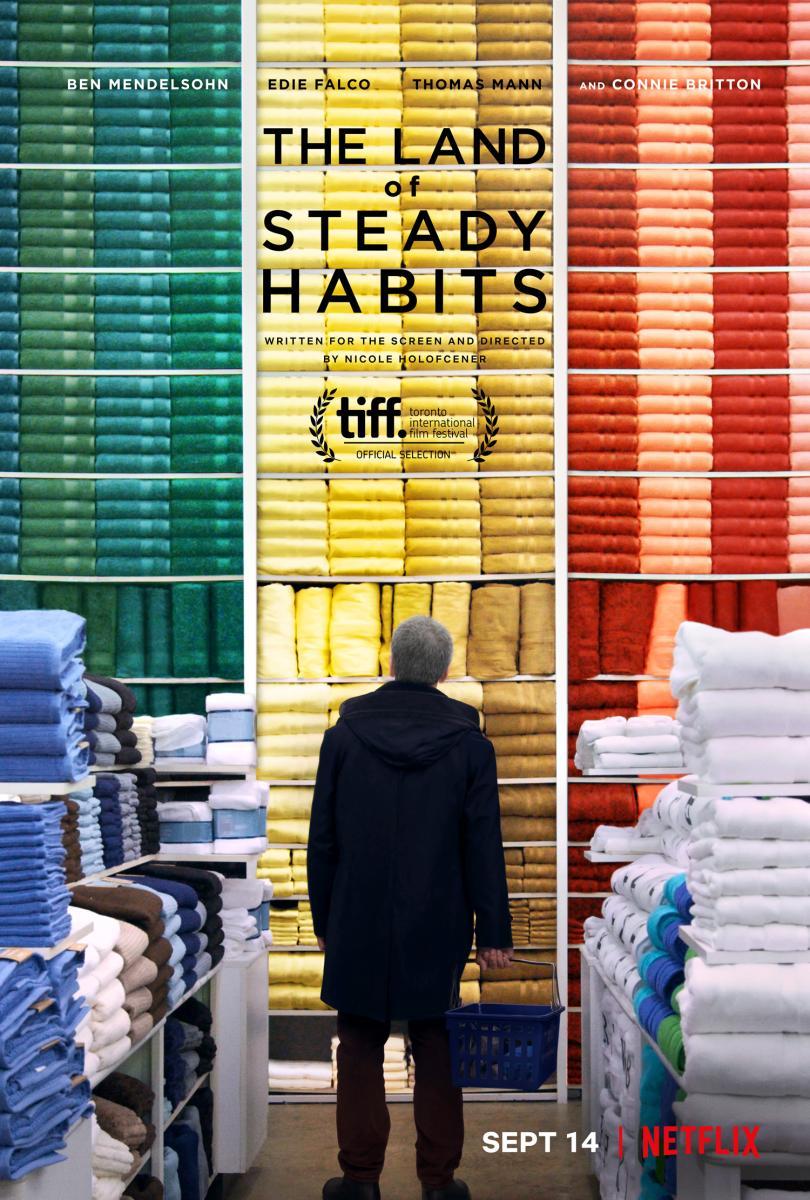
 When your life is falling apart and nothing seems to be working out, how do you find the motivation to pick up the pieces and put it all back together? This is the focus of the newest from indie film virtuoso Nicole Holofcener, The Land of Steady Habits, a very funny comedy about some very serious issues. This is a film that has not been given the attention it deserves, and when you look beyond its very simple execution, you find a touching film that looks at modern life and a band of characters navigating their own mundane existences, hoping to lift themselves out of the drudgery that they have voluntarily put themselves into, without even acknowledging their own shortcomings. Witty, sharp and as hilarious as it is heartbreaking, The Land of Steady Habits is a wonderful achievement, an unheralded gem of contemporary independent filmmaking that does not do much in regards to revolutionizing the genre or imbuing it with anything that hasn’t been done before, but still managing to be an astoundingly moving film about life and celebrating the small moments of existential beauty that often are ignored in our frantic, self-obsessed lives.
The film looks at the Hills, who used to be a traditional suburban family, until Anders (Ben Mendelsohn) decides to ask for a divorce from his wife, Helene (Edie Falco). Anders subsequently retires from his extremely successful finance job in the hopes that he may start afresh in his new life as a newly-single middle-aged man looking for some meaning. Meanwhile, Helene starts a relationship with one of Anders’ old colleagues, Donny (Bill Camp), who is far more empathetic and loving than her ex-husband. Both Anders and Helene have to help their son, Preston (Thomas Mann), who, despite being a grown man, still has the mentality of a child, refusing to grow up, having undergone treatment for drug addiction, and now working as a tutor for those who can’t read, under the care of his mother, who just wants to help her son enter the real world. However, he is caught between the conflicting lives of his mother and father – his mother, who just wants to move on and find the happiness after heartbreak, and his father, who is looking for some meaning in his own life, atoning for his sins and trying to fix his mistakes, through both starting new relationships which are bound to fail because of his egotistical desires, and by showing his ex-wife that he is far more mature than she sees him, which usually ends in him coming off as even more delusional and juvenile than ever before. These three characters all have their own personal quandaries, and go through their lives just looking for the comfort and happiness that those around them have – yet, we soon learn that everyone is battling their own problems, and just trying to repeat the same steady habits in the hopes that while no one gets out of life alive, we can at least be happy living it.
Ben Mendelsohn is the quintessential character actor – usually being given a range of villainous roles in bigger films, which pander to his penchant for playing sinister, malicious characters, but also having found a home for his talents in independent cinema. I was thoroughly impressed with his work in Mississippi Grind three years ago, playing a gambling addict trying to improve himself. He returns to similar thematic territory with his performance in The Land of Steady Habits, which once again sees him portraying an ordinary man with his own vices and personal problems that make some mistakes, launching him into a self-examining odyssey of picking up the pieces and making changes to himself and his environment. His performance as Anders is excellent – he is calm, measured but also deeply nuanced and brings a certain complexity to the character that elevates it above the archetypal “middle-aged man in crisis” that normally populates these kinds of films. Thomas Mann plays his son, and what initially appears to be an inconsequential supporting role turns into one of the film’s most empathetic characters. Playing the recovering drug addict son of Anders, Mann is tremendous – he finds the humanity in a character searching for some sense of belonging, wanting to grow up and knowing that it needs to happen, but not having the motivation to actually do it. There are some very subtle parallels drawn between Anders and Preston – both have been forced out of their comfortable suburban lives and have to adapt to the world around them, re-entering the community as productive members of society. Edie Falco is as wonderful as ever as Helene, and while a lot of her performance is just reacting to the antics of her ex-husband and the mistakes of her son, she gets some wonderful moments of introspection herself. Bill Camp, Elizabeth Marvel and Connie Britton are all excellent in supporting roles and have their own very touching moments.
There is a moment in The Land of Steady Habits where the main character, after an unsuccessful sexual encounter with someone he barely knows, picks up a book on the bedside table and scoffs at its title: Live Your Best Life Today. This isn’t an inconsequential moment of heightened misanthropy on the part of our protagonist – it is the underlying theme of The Land of Steady Habits, whereby it is a chronicle of the holiday season in the lives of a few characters, each of which is searching for some meaning and hoping to improve their lives. None of them is particularly disadvantaged, so it is difficult to feel any sympathy for these upper-middle-class people who live in their grandiose houses and have relatively easy lives – but underneath their pleasant existences, there lies insecurities, anxieties and boredom from the mundane nature of their lives. This is a film that follows them as they undergo the necessary journeys of self-improvement that they feel they need. Throughout The Land of Steady Habits, we see these characters come to the realization that starting anew doesn’t mean abandoning every part of your past, but rather confronting your previous actions and atoning for them, which is the only way to move forward. The Land of Steady Habits challenges the audience to consider their own actions and how what they have done in the past affects those who they have encountered throughout the years – this is not the most uplifting film, and it may leave one somewhat depressed, because it has a bleak outlook, including the final act, which is uncomfortable and heartbreaking. Yet, The Land of Steady Habits finds some humour in horrible situations, and the sadness and awkwardness of the story are used effectively in the endeavour to show that as difficult as it may be, making a better life for yourself requires a lot of introspection, but that it is eventually worth it.
One aspect of The Land of Steady Habits that needs to be mentioned is that this is a film with truly realistic characters – like many independent films, the focus is more on truthful portrayals of ordinary people, and it is clear throughout the film that the intention was not to create endearing characters, but brutally honest ones. The result is a film that features several unlikable characters who don’t possess many redeeming qualities, but at the benefit of them being tragically realistic – everyone in this film is inextricably human – flawed, insecure and terrified about what the future holds. The Land of Steady Habits questions the notion of “normal” – what exactly qualifies as being “normal”? These characters are not particularly special – they are often shown to be spoiled, privileged and ignorant to the real world – they live in a New England safe haven, protected from the realities of the world, with their biggest concern being the three-story department store that took the place of an old bank. Yet, they are real, as are the experiences that they have – the film is centred on the concept of learning your lesson, without actually learning anything. Despite the introspective journies of these characters, whereby they do move forward, they don’t become perfect individuals: they resolve a lot of their issues, but they are destined to continue making mistakes, and they will doubtlessly have to atone for a lot more than what is shown here. There isn’t really much of a traditional resolution to The Land of Steady Habits, and it ends with many of the characters in much of the same position that they were at the beginning, just with different quandaries and enigmatic problems that they have to work through. The Land of Steady Habits, to its credit, is a brutally honest portrayal of ordinary life, showing that life is very different from fiction – there is no such thing as a completely “fresh start”, and the past will always haunt you in some way: the less is that we should embrace our mistakes, seek the necessary forgiveness and move forward, using them as motivation for living a better life in the future.
Nicole Holofcener made something quite excellent in The Land of Steady Habits, a wonderful independent comedy that holds its characters very close to its heart and makes sure to explore them with nuance and grace. It may not be a particularly distinctive work, and it is not one that will convert detractors of independent film, but for those that enjoy these deeply-human, intimate stories, it is very special. It features some great performances on behalf of Ben Mendelsohn and Thomas Mann, both of which really astonished me, and an ensemble of dedicated performers depicting the lives of these ordinary characters with such authentic elegance and tender cynicism. This is a quaint and modest film, one that doesn’t promise anything too bombastic or incendiary, but beneath its humble surface, there is an explosive social story that is hilarious, but also profoundly heartbreaking. The Land of Steady Habits is an excellent film and one that is unassuming but effective. Paced, meaningful and riveting in its own way, this is a film that deserves wider exposure, because it has an immensely powerful story that will resonate profoundly with the viewer. A very special film, and one I hope everyone will seek out.
 The Postmodern Pelican