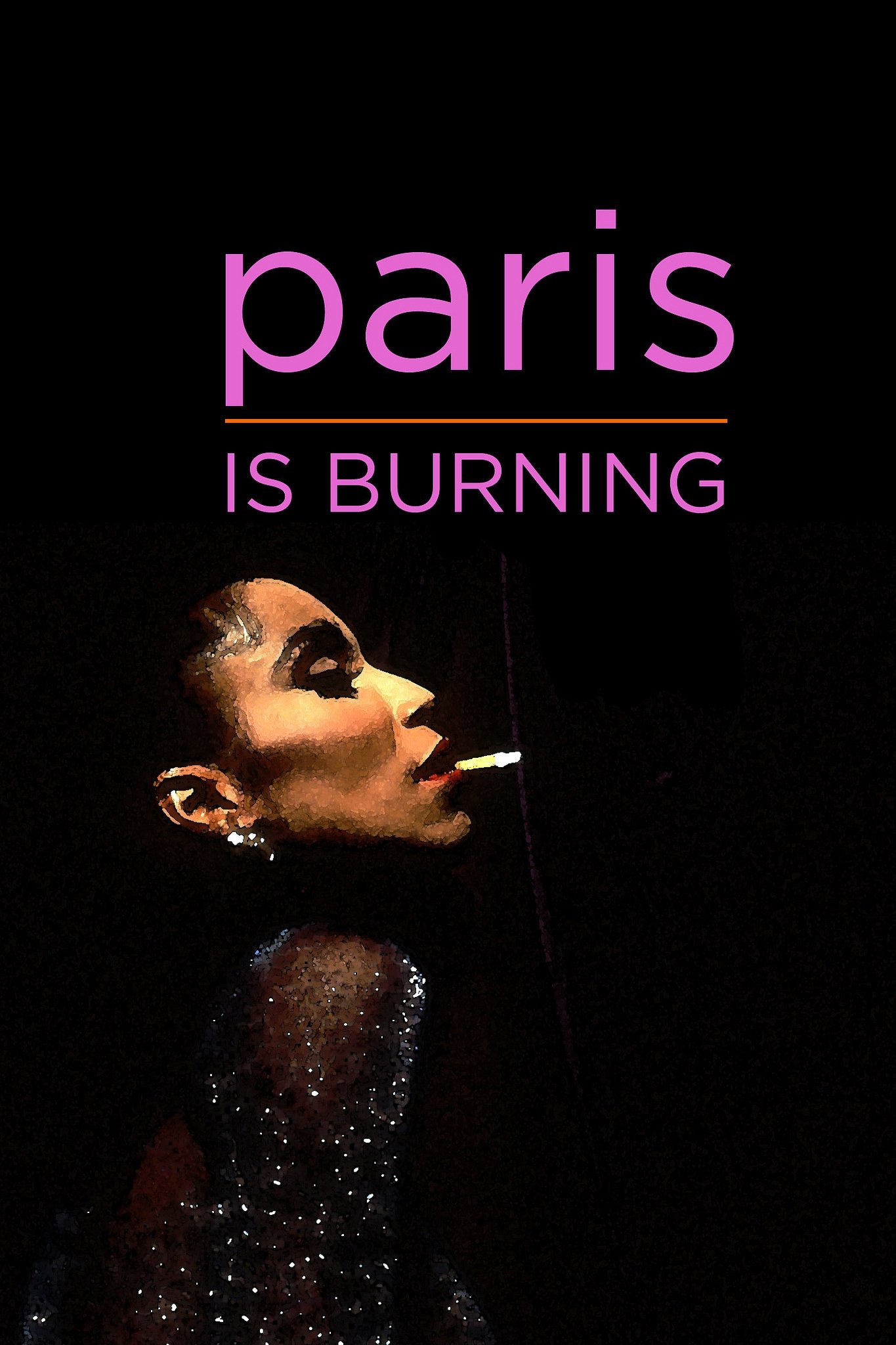
 I will be blunt – Paris Is Burning, without any hyperbole, is one of the most important films ever made. It is the rare breed of documentary film that weaves a beautifully poetic story out of the truth, creating something profoundly meaningful and deeply wonderful. It is a film that represented a portion of the worldwide demographic that would never be given the platform this film offered them otherwise, and they use the opportunity to tell their stories and show the world who they truly are better than most performers. Paris Is Burning is a seminal classic of documentary filmmaking, and one of the cornerstones of progressive cinema, remaining as enduring and relevant today as it was over a quarter of a century ago. There is so much that Paris Is Burning is able to say through so very little, and it manages to be a film that represents reality through a filter of unabashed truthfulness, presenting things as they truly are. It is a documentary film that is upbeat, charming and endearingly hilarious, as well as tragic, haunting and unbelievably sad. In all honesty, I cannot possibly refer to Paris Is Burning as anything other than a film vital to the cinematic landscape, a masterpiece of postmodern filmmaking that celebrates and mourns in equal measure, resulting in one of the most delightful but melancholic experiences anyone, regardless of who they are, will find themselves resonating with. This is precisely why Paris Is Burning is nothing short of being utterly essential.
Paris Is Burning has developed quite a folkloric reputation for its subject matter, being one of the first, and certainly one of the most notable, films about the LGBT community. It focuses entirely on the New York “ball” sub-culture, whereby members of the community meet for events akin to beauty pageants, but instead of being judged superficially, they are rewarded for a variety of factors, both internal and external, such as how convincing they are in their chosen identity. The film, made by (at the time) amateur filmmaker Jennie Livingston, was a labour of love, as she worked on this film for six years, painstakingly constructing an image of a sub-culture that only grows in popularity, yet these individuals constantly struggle to assimilate into mainstream society, being forced into finding their sanctuary in the welcoming arms of those who gather to celebrate being different and diverse, giving each other the necessary love and compassion that the “real world” often refuses, based on one’s sexuality, gender, class or race. Livingston interviews many individuals involved with this sub-culture, all of which give their own perspective into the traditions, as well as conveying their own thoughts about society and its perception of non-conforming individuals in general. These subjects don’t only allow the viewer into the exclusive and secretive underground world of balls – they allow audiences unfettered access into their own lives, where we are shown their broken dreams, rambunctious ambitions and deepest insecurities, with these individuals shedding their extravagant personas for the purpose of showing that underneath the (often stolen) couture and flamboyant makeup, there are real human beings, with their own stories, which Livingston sets out to tell through her incredible film, Paris Is Burning.
For a film that runs an extremely lean 78-minutes, Paris Is Burning covers large thematic ground, focusing on a fraction of the LGBT community, but conveying many of the most pressing, important issues facing the society at large. Race, gender, sexuality and social class are all present in this film – and we will look at all of these in turn, but there is something else that needs to be noted, the uniting factor amongst all of these elements, and arguably the one theme that Livingston intended to convey the most – Paris Is Burning is about one important issue: representation. Mainstream cinema has never been particularly kind to the LGBT community, and while it has often embraced these stories, the community is not fully understood or represented in a way that is not novel or focused entirely around these issues. Still, to this day, many films and television shows are marketed as “same-sex romances” or “transgender dramas”, or similar terminology. This is not necessarily regressive, but rather stagnant. Paris Is Burning aims to change this perception, and the most notable obstacle in the way of this film is that it is not contemporary – it was made in the late 1980s, which meant gay rights were present, but the world was still unaccepting, even more so than it is now. Watching Paris Is Burning in 2018 is almost tragic because a lot more should have been changed by now. Arguably, there is a bright horizon that the world is moving towards – legislation is being put forward that improves the lives of LGBT+ individuals, as well as society finally starting to be more accepting. Yet, representation is still too novel, and considerable leaps and bounds have been made to repair this problem, but until a particular relationship between filmmakers and audience exists, whereby the filmmakers are audacious enough to tell stories that are truthful, honest and often harrowing, and audiences willing to receive these stories that could be both beautifully poetic and heartbreakingly sad, will the media catch up. This sounds like bitter ramblings, but the fact that we do not see stories like those told in Paris Is Burning on a much wider platform is unfortunate, because if there is anything that can be taken from this film, it is that these stories are worth telling.
Talking about a documentary film is often very difficult, and this is precisely why I am so intrigued by them – not only do I have an odd relationship with reality, where I find myself transfixed by cinematic representations of what is real more than what is fictional, but because they force me to look at the world in a different way. Every documentary film I have ever seen has changed my outlook in some way, whether massive or marginal, and Paris Is Burning is not an exception. The key to looking at a film like Paris Is Burning is to ask two pivotal questions: what is this film trying to say, and how does it say what it wants to say? In terms of the first question, it is quite obvious what this film is attempting to say: it wants to show the beautiful, tragic and fascinating world of ball culture, and the colorful, eccentric and endearing individuals that align themselves with this magnificent but troubled community. It is a film that explores a wide range of themes and does so in a way that is often entertaining but never shies away from profound truthfulness. Various facets of reality merge to form a portrait of a city and community in flux, where issues of race, gender, sexuality and social class all intermingle, with the individual stories of these people creating intimate, delicate portraits of what it means to be different in a society that embraces conformity. It foregrounds the individual and contrasts it with bigger issues, such as the looming horror that was the HIV/AIDS epidemic that was emerging rapidly during the time when this film was being made, and knowing what we know now, it only makes Paris Is Burning even more moving.
Now onto the second part of my central question: how does Paris Is Burning say what it is trying to say? I would expect watching this film nowadays is a profoundly different experience to watching it in 1991, especially considering what changes have been made, as well as what still needs to be changed, that directly correlates to what is being said in this film. Livingston balances the comedy and the tragedy in this film, interviewing subjects who relish in being able to tell of their exploits as if they were relaying a great historical epic, as well as being open enough to explore their own deepest insecurities and ambitions, explicitly stating what they feel needs to be heard. There is a profound sadness that strikes you as you watch this film today because nearly every person who is interviewed in this film has since passed away, with one of them even dying during the time when this film was in production. Livingston finds the perfect balance between levity and gravity, and she carefully constructs a film that is both a celebration of a unique, idiosyncratic community of societal iconoclasts, as well as a portrait of the difficulties that face the community, clear and present dangers upon these individuals, with many of them falling victim to the aforementioned tragedy that still persists to this day. What struck me as particularly noteworthy about Paris Is Burning is that very rarely does a film manage to be so tonally diverse and oscillate in emotion without being fraught with inconsistencies or instability. Livingston works with a precision not many documentarians can attest to, and considering Paris Is Burning includes acknowledgements directed towards the likes of Werner Herzog, Frederick Wiseman, and John Waters, it is not surprising that she would draw inspiration from these masters of subtle celebration and meaningful social commentary, whether in their works of fiction or reality. In essence, Paris Is Burning is both heartwarming and heartbreaking, one that tugs at the heart-strings elicits riotous laughter and jerks several tears. It navigates the proverbial tightrope of humor and pathos with deft precision, and the result is an astonishing film that is moving beyond description. I am still struggling to comprehend this film and organize my feelings in something resembling a coherent thought. There are rarely ever films like Paris Is Burning, and I simply cannot explain how beautiful this film is.
In this film, many important social issues collide – race forms the core of the film, with Paris Is Burning focusing almost exclusively on black and Latino individuals, and as one of the interviewees states at the beginning, being gay and black was not particularly embraced in that era, and unfortunately still is. This is a film that does not revile mainstream representations of homosexuality, but rather shows a different demographic, which definitely does make an impact, showing that LGBT individuals cannot be painted with the same brush. Paris Is Burning also looks at class, with most of these people being from poor backgrounds, working jobs that barely allow them to survive. They aspire to grand achievements, and while some do flirt with fame, others are not quite so lucky, falling victim to homelessness, making their living in any way they can. Paris Is Burning is a complex film that does not focus on one aspect, but rather is about intersections of different identities, resulting in some truly tremendous filmmaking.
Paris Is Burning says a lot, but one thing rings out with more willful resonance than anything else: this is a film about acceptance, about tolerance and about freedom of expression. It is not a film targeted about the LGBT community – and while this film certainly does play an important role in the lives of many members of the community, this is a film that also tells various stories of individuals that would normally be stereotyped or marginalized. Livingston gave these individuals something truly valuable: the chance to tell their stories, and that clearly meant so much to them. Paris Is Burning is a truly wonderful film, and it has so much resonance, even if only to be a brutally honest celebration of what makes all of us unique and wonderful individuals. It is not an understatement that film has the power of changing perceptions, and Jennie Livingston’s joyous representation of the human spirit in Paris Is Burning is absolutely astonishing. It is a film that manages to be endearing and heartwarming, but also hauntingly sad, especially in the film’s climax, where the interviewees merge past and future in testifying as to where they’ve been, as well as where they hope to go. Paris Is Burning is an essential film, because not only is it an enduring snapshot of a unique, wonderful community, it is a film about tolerance, acceptance, and individuality. In spite of its often very serious subject matter, it makes the bold statement that self-expression is nothing to be even remotely ashamed of, and implies that rather than hiding from the judgmental gaze of society, we should allow our individuality to resonate from the rooftops. Paris Is Burning is a special film, and one of the most important documentaries ever made, because it does the most important thing a documentary should do: it shows things as they are, and celebrates life in all its complexities.
 The Postmodern Pelican