
I may be able to understand the secrets of the universe, but… I’ll never understand the truth about you. Never.
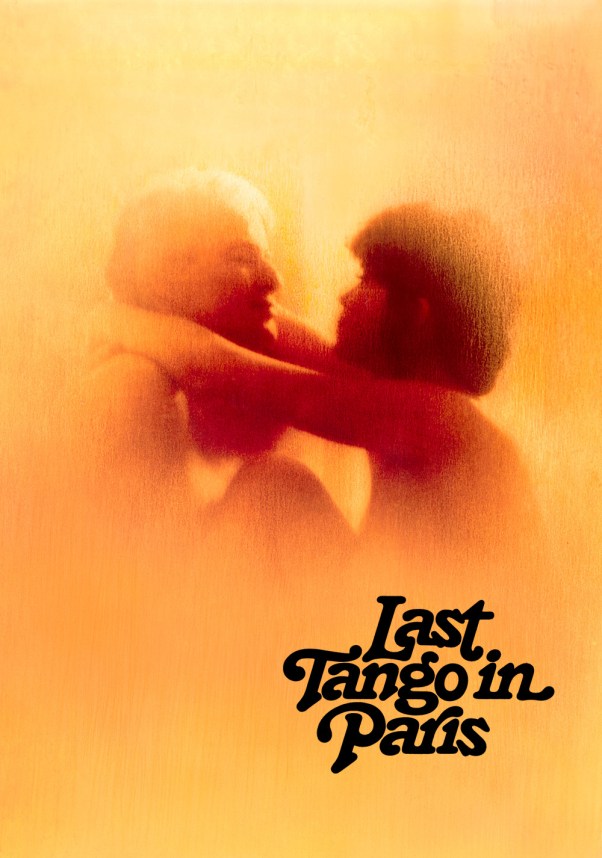
These haunting lines, spoken by Marlon Brando, ring out like a cacophony of unconventional truthfulness in Last Tango in Paris, a film that left me almost entirely speechless, unable to articulate my thoughts precisely (this is not indicative of a particularly great film, but certainly represents a noteworthy one). Last Tango in Paris is a film so puzzling, complex and layered, it is entirely impossible to form a coherent opinion about it without considering the multitude of themes and motifs present throughout, as well as what this film leaves unsaid. It takes quite a bit for a film to truly shock or move me to the point of serious philosophical ponderings, where the implications of the film forced me to consider a deeper meaning of the world outside the film in general. Whether it is for better or for worse, Last Tango in Paris is one of these films, something that clearly demanded significant thought and reflection in order to understand exactly what it was trying to say. It is a film that almost appears to be an anomaly – it is a grotesque merging of the sacred and the profane, a deeply worrying vision of the nature of society and the inherent human quality of satiating desires that could potentially be immoral or even illegal, while still being a deeply profound celebration of the beauty of human connections. Bernardo Bertolucci made one of the most enigmatic films of the 1970s, a masterwork that I am still trying to understand fully, coming to terms with the nuances of the narrative and come to a conclusion regarding what I actually thought about this film, because there are alternating thoughts that come as a result of this film: extreme adoration, and bitter disgust. However, there is one word that cannot be used to describe my feelings towards this film after experiencing it: ambivalence. It is a film that evoked emotions in me that are rarely experienced, and such an audacious and provocative film is certainly worth some form of attention.
Paul (Marlon Brando) is a 45-year-old hotel owner living in Paris, having moved there from America years before for reasons that are not explicitly stated, although he says what remains in his home country are nothing more than “bad memories”. He has recently become a widower after his wife committed suicide, which leaves him depressed, lonely and more than anything else, utterly confused and without any direction. Purely by chance, he encounters a young woman named Jeanne (Maria Schneider), who is engaged to her pretentious filmmaker boyfriend, Thomas (Jean-Pierre Léaud), when they are both looking at a potential apartment to rent. Of course, neither individual is aware of who the other person actually is, or the details of their lives, preferring to keep their personal lives in the distance as they begin an entirely anonymous sexual relationship, meeting often in the squalid Parisian apartment that served to be the facilitator of their first encounter, with their bonding only growing more intense as the days go by. Neither learns much about the other until their sadistic, nihilistic relationship reaches a grotesque peak that drives them apart and subsequently brings them closer together as they realize that the connections they have formed extend far deeper than simple sexual gratification. Their relations impinges on their psychological state, whereby they find themselves influenced by the other on a terrifyingly metaphysical level, and that their relationship is much more than it seems. It culminates in a bleak and hopelessly profound conclusion that sees them reaping exactly what they had sown over the course of their very brief and intensely passionate relationship.
There are few actors as folkloric as Marlon Brando – the unreachable standard upon which every actor is either measured or aspires to reach. I am not entirely sure how I feel about Brando, because despite considering him one of the most talented performers to ever live, I look at him with awed admiration rather than fervent adoration. He is a figure that has amassed into something most certainly larger-than-life, and his countless iconic performances provided him with the legacy that very few actors will ever hope to achieve. Last Tango in Paris is one of the few highly-notable performances from Brando’s career where I feel the audience was privy to his inner machinations, where he was truly and unimpeachably vulnerable. Do not misunderstand what I am saying – Brando truly was one of the greatest to ever live, but even in his most subtle, such as On the Waterfront and A Streetcar Named Desire, there was an almost celestial boundary surrounding his performance. Last Tango in Paris is something entirely different, and the fact that he managed to produce such a performance after already being one of the most established actors of his generation, having made several iconic films, is what truly impresses me. Brando plays Paul with a combination of hopeless melancholy and a youthful angst. It is a performance that is difficult to describe in coherent terms, but what Brando does with this character is astonishing. He finds the perfect balance between excessive and subtle, with the moments of fury being frenetic and energetic, and the more quiet and intimate moments striking a true emotional chord.
In every gesture and movement, Brando adds nuance to his character, and I would be dishonest if I didn’t admit that this could quite possibly be not only Brando’s greatest performance but one of the greatest performances of all time. The film is still recent in my memory, and I am still working through the experience, but very few performances have made me so riveted and alert as Brando’s in Last Tango in Paris, and despite being the greatest actor of his generation, I still found myself marveling at the fact that he had this in him. Understandably, Brando severed ties with Bertolucci after making this film, disillusioned with the fact that he was forced to emotionally expose himself in a way that was unlike anything he had done before. Surely if even an actor as towering as Brando feels insecure about having the limits of performance pushed further than it needs to be, it indicates a truly transcendent, truthful and unique cinematic performance. The multiple images of Brando in this film, such as the haunting final scene or the monologue over his wife’s corpse, linger indelibly on my mind, and I highly doubt they will fade any time soon.
I do not envy Maria Schneider – even if the content of this film was not a factor, she still had the monumental task of sharing the screen with a giant of cinema like Brando. Her character of Jeanne is not nearly as well-constructed as that of Paul, but through her own audacious performance (criticisms to which I cannot understand – she played the vulnerable but willful Jeanne exceptionally well) and her chemistry with Brando, she gives a wonderful performance. Her performance is sensitive and delicate, but it is far from being conventional, and her portrayal of a woman who is in search of something deeper is astounding. Yet, it is difficult to separate Schneider’s performance from the usage of the character, because Jeanne often is conveyed as a tool for other characters. Schneider, to her credit, is very willing and endures the perversions of the filmmaker in forcing her to undergo physical and psychological violation for the purpose of the narrative, and unfortunately, her performance, which is strong in its own right, falls victim to the story around her character.
Jeanne is constructed as something to be used and abused by men, and there is some merit in considering Paul and Jeanne’s intended, the filmmaker Thomas, in comparison to one another – on the surface, they are distinct characters who never encounter each other, separated by age, nationality, and profession, with Jeanne’s world being bilateral, with both of her lovers existing in different environments and serving different purposes. Yet, Jeanne serves only one purpose to them – she is the vessel through which their desires flow. Paul releases his anger and anxieties through brutal sexual encounters in which he forces the young woman to adhere to his every desire. For Thomas, Jeanne is his muse, the subject of his latest film, and while he may not physically violate her, he does force her to reveal her past, her uncomfortable experiences and deepest insecurities to be broadcast to the world.
Bertolucci seems to be a very self-aware artist, and there is an interpretation that can be made that both Paul and Thomas are surrogates for his own desires, as a man and as a filmmaker. It isn’t wise to draw a comparison between the physical violation of non-consensual sex provided by Paul, and the psychological violation of having your life exploited for the entertainment of others, such as Thomas’ insistence of having his crew and camera always on hand to capture every moment of Jeanne’s life. However, whatever statement Bertolucci was trying to make by morphing Jeanne into an objectified muse from which men in a heteronormative society can garner their pleasure is uncomfortable but effective, but the suffering Schneider had to endure for what is construed as art is inexcusable, and one could only believe that there were alternative ways in extracting the same effectiveness in a less violating way. In spite of what her character represents, Schneider is ultimately very good in the film, her naturalism working well in the context of the story, and she impressively holds her own against Brando, which is not an accomplishment that should go unheralded.
Last Tango in Paris is, in spite of its controversial reputation, a film about romance. This does not necessarily mean that it is a romantic film, and it is perhaps the most unconventional films ever made on the subject of romance if we can even call what Paul and Jeanne experience as such. Personally, I feel like what drove this film was morbid infatuation and sexual desire rather than romance. However, Last Tango in Paris has many noteworthy statements to make, as well as taking some bold stances, such as in this instance, whereby Bertolucci was attempting to redefine cinematic representations of romance. It is a film that draws a distinction between love and passion, and it looks at the subject from the standpoint of passion not necessarily being romantic at all. I am reminded of a passage from Chronicle of a Death Foretold by Gabriel García Márquez (a novella that is also intent on drawing a distinction between love and romance), where, on the subject of one of the protagonists, it says “Mistress of her fate for the first time, Angela Vicario then discovered that hate and love are reciprocal passions” – and this provides us with a framework into the motivations of these characters. The characters of Paul and Jeanne, and their relationship, continuously shifts in two ways: the sexual ventures become more violent and shocking, as well as the fact that they steadily grow in hatred for each other – yet, the passionate nature of their relationship remains constant, if we consider passion as being akin to intensity.
The theory here is that passion has become associated with positive emotions quite inaccurately, and that passion itself can be built on a foundation of vitriolic hatred and resentment. In Last Tango in Paris, Bertolucci channels the concept of passion through the lens of perceived romance, violent and visceral sexual encounters that deplete the participants and force them to resent the other, but be singularly unable to detach themselves from the relationship, purely because their fears, anxieties, insecurities and furies are channeled into their relationship. It becomes very clear throughout that Paul and Jeanne are not looking for romance, as they can easily find it elsewhere. The reason for their anonymous sexual encounters are merely a way of working through their own personal crises, using the other as vessels through which they can experience cathartic release from their problems. Last Tango in Paris is not a romantic film, but rather a film about the use of perceived romance and passion as a way of dealing with the insecurities of the self.
I feel the brilliance of this facet of the film is entirely lost in the controversy surrounding it, and the reason why I waited so long to watch Last Tango in Paris is entirely due to the perceived belief that this is one of the most controversial and shocking films of all time. Regardless of the fact that it was made over four decades ago, and was subjected to the same mentality that condemned films like A Clockwork Orange and The Exorcist, films that remain influential, but are hardly the corrupting, immoral disasters audiences in the 1970s perceived them to be. However, do not misunderstand: Last Tango in Paris is a brutal, grotesque and shocking film and one that should not ever be experienced without considerable thought and preparation. However, it is not an explicit film – there are only three or four scenes of actual sexual activities, and in total, they take up less than ten minutes of the film’s entire running time. These scenes, as controversial as they are, are not shocking by today’s standard – in fact, one could even consider them extremely tame, but only in terms of visual representation. Last Tango in Paris garners controversy not from what it shows, but rather from what it implies. The sexual encounters, as I have mentioned before, only increase in brutality, purely because of the contexts in which they occur. Last Tango in Paris is a film that is even more controversial in the current era, considering the overdue movement towards ending gender-based sexual violence, and looking at this film from a contemporary perspective makes it even more uncomfortable – consent is entirely missing from this film (and considering the reputation this film has garnered through how it was made, it is made even worse, but it wouldn’t be wise to focus on this aspect at this time), and it is a film not about a willing sexual relationship, but rather a sadistic one built on violations and indecency. Visually, Last Tango in Paris is nothing more than uncomfortable. However, in terms of the underlying message, its implications are savage and polarizing.
Last Tango in Paris is often unbearably difficult to watch, but it is not worth entirely dismissing, because there is something much deeper contained within this film, something that is far more interesting and deserves more attention than the more controversial aspects of the film. Last Tango in Paris is a philosophical film. It features two strangers drawn together by only one thing: feelings of isolation. Last Tango in Paris is a film, as I have suggested before, where sexual perversion and violence is used as a way of these characters accounting for their own existential crises. Despair and passion intermingle with philosophical strife as the two main characters try and deal with their own personal quandaries. However, the important question is what precisely were they looking for when starting their relationship? Logically, we could say they were looking for companionship. Paul has just lost his wife, and Jeanne is engaged to a pretentious filmmaker who considers her to be more of a tool to progress his own dreams and ambitions, rather than being his lover. However, this is only a surface-level representation, and considering other factors such as the anonymity and their desire to remain detached from the outside world suggests something much deeper, and something quite oppositional to the idea that they are looking for companionship – they are searching for a deeper individual meaning to their lives. They are in pursuit of themselves, attempting to account for their own fragile mental states and delicate egos. This is not an uncommon trope in cinema, and I can instantly name a dozen films that have the same theme of a pair of lonely individuals attempting to find themselves through the help and companionship of others. Where Last Tango in Paris differs from these films is in two ways: the first is that their relationship is hideously cruel and violating, without any tenderness or restraint, nor the most important feature of any solid relationship, romantic or otherwise: mutual respect. The second is that there is not any resolution to their crises. They do not proverbially “find themselves”, and the ending is puzzling, unsatisfying and utterly perfect, considering that Last Tango in Paris is a film about a pair of selfish, egotistical individuals who use each other for their own individual means, which only results in shared despair.
Continuing with the theme of lonely individuals, we can extend this even further by looking at the concept of isolation as a motivating factor for these characters. Paul is an American in Paris (one of cinema’s most beloved tropes), but he is not quite a visitor – he owns a hotel there, he met his wife there and has lived in the city for years. He speaks French with relatively strong proficiency, and he is more than just a guest or tourist in the city. He came to Paris to escape whatever ghosts haunted him in America, and has made his home amongst the French people – yet, throughout Last Tango in Paris, there is an unshakable feeling that Paul is between countries, not quite American, not quite French. To bring literature into this again (which may seem odd, but considering how Bertolucci was inspired by other artistic works, even including the work of Francis Bacon in the opening credits, and using the artist’s aesthetic in the visual composition of the film), Last Tango in Paris has many similarities with James Baldwin’s Giovanni’s Room (whether these similarities are intentional or coincidental is unclear), with the character of David in Baldwin’s novel being akin to the character of Paul here. Both are American men, escaping the heteronormative constraints of their home country by fleeing to Paris. Neither wants to be American, but neither can be Parisian either. They both find love with another lonely individual searching for their own meaning, and they undergo an increasingly intense sexual relationship by meeting in one specific location, in both instances a squalid, degrading apartment in which all desires and temptations are satiated, sometimes sadistically so. Of course, there are many differences between Giovanni’s Room and Last Tango in Paris, such as the fact that the former deals with a same-sex couple who actually may be in love, as opposed to the nihilistic passion of Paul and Jeanne, who clearly are not.
Both works, however, end in tragedy, and the haunting final moments are deeply melancholic. The point I am getting at here is that fleeing one way of life by retreating to the other may not be as simple as it seems, but it is made more difficult in the instance of Jeanne herself. Paul is an American man who wants to be French, whereas Jeanne is a French woman who wants to be American. I mentioned previously how Jeanne is an object used by Paul and Thomas in their egocentric quests to satisfy their desire – yet, Jeanne also uses them in her own way. Paul is seemingly her only contact with America – her speech changes to be more like Paul’s, and her appearance undergoes gradual change from relentlessly European to typically American. Last Tango in Paris is a film about two main themes – isolation and entrapment, both internally and externally. Both protagonists feel crippling isolation from those around them, and feel trapped in a social environment that expects them to conduct themselves in a particular manner, despite the fact that they do not quite fit in. Paul and Jeanne are shown to be similar in their inability to adhere to these expectations, and deal with their own crises through their sadistic and violent relationship in the hopes of repairing themselves through the exploitation of the other.
I have said a lot in this discussion and tried to encapsulate all the themes of Last Tango in Paris as simply as I could. It is a complex film, and I would just like to point to one area of this film in particular that I feel illustrates everything the film is trying to say. For most of Last Tango in Paris, I was not sure if I enjoyed it or despised it, and I felt ambivalent about the film as a whole until the final act came about. Everything prior to this was effective but rather slow and slightly dull. However, the last part of this film, particularly the last twenty minutes, is sheer genius, brilliant in every way, and every scene of the film is covered in those last few moments. The protagonists reunite and head off to a dance hall, where they decide to rekindle their affair, properly this time. They finally learn about the other – but at the cost of something much deeper, for it wasn’t the passion keeping them together, constantly seeing each other, but the anonymity, the fact that the other person was nothing more than an object of use and desire, and nothing more. For Paul, Jeanne is no longer the young, attractive creature upon which he can assert his sexual desires, and for Jeanne, Paul is no longer the mysterious, aloof foreigner that can hopefully help her escape the dullness of her current life. They are no longer useful to one another, and the film ends on a tragic but necessary note.
The final sequences of this film – Paul’s attempts at being a romantic, loving suitor, rather than a vicious, violent and unhinged sexual deviant, is shocking – not because of his radical change in behavior, but because of how real it seems. Brando, in the final scenes of Last Tango in Paris, seems to be at his most debonair and suave, almost the opposite of his breakthrough role as Stanley Kowalski in A Streetcar Named Desire or his most celebrated performance, as Terry Malloy in On the Waterfront, roles that required him to be rugged and working-class, but endearing and likable. Paul’s attempts at being charming are jarring and terrifying, because it is effective, and considering the previous events of the film, one would not consider this individual to feature any redeeming qualities. It all lends itself to the wonderfully surreal nature of the climax of this film, with the titular last tango in Paris being an unconventionally moving moment (perhaps being the only moment in this film that can be considered something close to beautiful). These final moments are the culmination of the film as a whole, containing thoughts on passion, philosophical quandaries and the nature of existence. Bertolucci concludes this film in a shocking but effective manner, and it all works towards the deeper meanings throughout the film, the likes of which are not entirely clear from the outset, but only some slight pondering reveals what he was trying to convey with this film.
Personally, I feel like Last Tango in Paris, while often grotesque and shocking, has been done a great disservice by the reputation it has accumulated over the past forty-five years. As horrific as the actions are, both in front of and behind the camera, this film is much more than just an erotic drama film. It is a film about so much more than just an anonymous sexual relationship. It is a film about philosophical crises and the inability to feel welcome, both within a society and within oneself. It is an audacious, complex film consisting of layers of nuance and detail that work towards constructing something truly profound, and even if we put the more infamous scenes aside, there are multitudes of other moments within this film that convey the message that seems to have been lost over time. It has a complex story, which is only supported by the exceptional technical elements, such as the work of maestro cinematographer Vittorio Storaro, who uses light in a way that does not only buttress the themes of the film but also tells a story of its own. There is very little doubt that Last Tango in Paris will continue to be a controversial, contentious film, and it would be odd if this was a universally-adored film. While I personally feel the rhetoric around this film’s content unfairly overshadows the metaphysical aspects of the story, it is necessary for this film to be controversial and debated. Last Tango in Paris is not an easy film, but it is most certainly a vital one.
Drawing back to the lines at the beginning of the review, Paul may have been able to figure out the secrets of the universe, but he failed at understanding something far more simple – human nature. He and Jeanne were simply selfish individuals searching for meaning through cathartic sexuality, and while the effectiveness of this approach is obviously non-existent, considering the conclusion, it does suggest that Bertolucci was hinting at something far more deeper, trying to focus on inherent human desires – the visceral corporeality, as well as the more philosophical desires of finding a meaning and escaping the crushing anxities that come as a byproduct of realizing that not only is one isolated, they are also trapped, and there is very little tangible escape from the metaphorical prison individuals such as Paul and Jeanne place themselves in. There is so much more that can be said about Last Tango in Paris, truly one of the most uncomfortable but mesmerizing cinematic experiences I have had in a while, but I’ll leave it at that for now.
 The Postmodern Pelican