 I often question why, out of all the filmmakers I adore and admire, it is David Lynch who I consider to be the singular figure that not only altered my perspective of art but changed my life in some way. Why he has remained arguably the most important artistic figure in my life, an individual whose multimodal contributions to the world of creativity has lingered on my mind and convinced me into following my own passions and desires through his relentless provocations of form and content, has always been somewhat mysterious to me. The connection I feel towards him, as is the case with all of the people he has inspired, is firmly-entrenched within his career as arguably the most important artistic iconoclast of his generation. He is also something of a figure of folklore, an artist who does not pander towards celebrity culture but is still very present in the creative world, which makes him an omnipotent but extremely mysterious individual. In 2007, there was a film entitled Lynch: One that was released that chronicled his experiences in the making of his final feature film, Inland Empire. That film was a pleasant representation of Lynch’s process, but it did not contribute much to uncovering the complexities of the man himself. It is only until now when a group of the same individuals approached Lynch for another documentary film, a film that would explore Lynch’s life through his art, that the audience finally gets a glimpse into the mind of the icon. The result is an intimate, fascinating and deeply moving portrait of the artist, and it was an extraordinary experience to see a film that focused on the demented and wonderful mind behind some of the greatest cinematic achievements of all time.
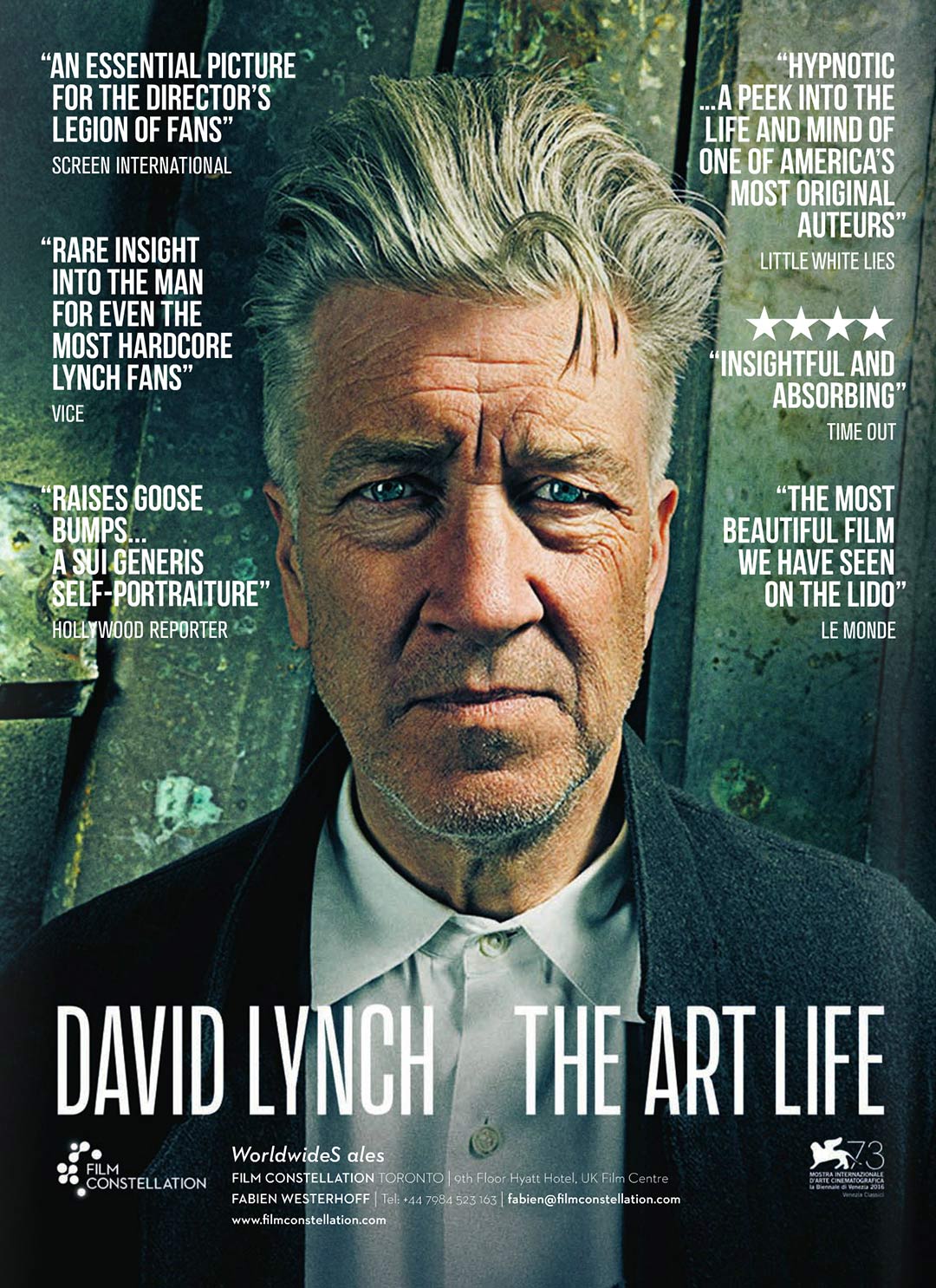
David Lynch: The Art Life is, as the title suggests, a chronicle of the artistic career of the eponymous individual, an exploration of his creative process and how his style and mindset has evolved as a result of the experiences in the formative years of his journey. It provides an account from the artist himself, narrating his growth from his birth in Missoula, Montana, to his childhood (which was highly influential in his later career, as evident by the memories Lynch shares about his happy but conventional suburban childhood), right through his young adult years where he was a starving artist pursuing what his heart desired above everything else. In David Lynch: The Art Life, filmmakers Olivia Neergaard-Holm, Rick Barnes and Jon Nguyen draw focus away from Lynch’s more iconic and well-known career as a filmmaker, and instead concentrate on his life as a painter, a form of artistic expression that Lynch grasped at a very young age and which persevered throughout his entire life, right up until the present moment. One can not help but imagine that while I am writing this, or you are reading this, that Lynch is in his ersatz studio, creating another shocking but fascinating masterpiece that defies all logic and characterization, and serves to rather be a joyfully demented expression of some dark recess of the mind of its creator, who is using the medium to convey the fears and anxieties that exist in his mind as well as our own.
Much like Lynch’s films or paintings, David Lynch: The Art Life seems to defy expectations and characterization, and is anything but a conventional documentary film. Anyone going into this film with the perception that it will be a traditional chronicle of the Hollywood career of the titular figure, showing the trials and tribulations of his cinematic career, filled with moments of manipulative histrionics and false emotion, will surely be disappointed. Much of David Lynch: The Art Life is Lynch himself narrating his own life, which take the form of fragmented stories and diversions into his own memories, as he comments on his own achievements in a way that is humble but representative of his inherent brilliance, not only as an artist but also as a great philosopher, someone who is able to find the meaning in the most inconsequential of situations and find some importance in the minutiae of everyday life. David Lynch: The Art Life is not a traditionally uplifting, motivating account of the failures of the man, but rather a film that carries the inspirational message of leading a life that is fulfilling, meaningful and ultimately rewarding to the individual. This life is, as the title suggests, the art life.
“The art life” does not merely refer to the life of an artist. It is true that Lynch is a man concerned with creating memorable works of art that represent the human condition, but it extends far beyond simply being about art. David Lynch: The Art Life is a film about fragmentation, constructing a complex structure out of disposable, unimportant fragments that bear no relevance on their own, but together, they mean something. In the most straightforward sense, Lynch uses fragments of waste material to make his art in many instances, but this simply a thinly-veiled disguise for the deeper meaning of this film, which serves to be a commentary on the fragments of experience – David Lynch: The Art Life is mostly Lynch extracting memories of experiences, using these fragments to construct a coherent overview of his life as an artist. Anne Carson, in 1998, wrote a verse novel entitled Autobiography of Red, which consisted entirely of fragmented poetic verses that were abstract and unremarkable on their own, but together they wove together a portrait of a complex young man, creating a collage of his life and his experiences. The same principle seems to be present here, and the use of Lynch’s own experiences as the backbone of this film makes it extraordinarily special. Even more notable is how intrinsically linked art and life is in this film – Lynch constantly refers to a book called The Art Spirit that was a major formative element in his development, yet he also refers to “the art life” – this implies that for an artist, life and art cannot be entirely separated – we are the product of our surroundings, with influence coming from innumerable sources of inspiration, positive and negative. This does not only bear relevance to artists, but to absolutely everyone – every decision that one makes, every path that one chooses to follow, is informed through being the sum total of our experiences – and sometimes, the best life is the one that seems ideal, in spite of any difficulties or impossibilities that may befall us along the way. If this seems obtuse and abstract, it is because it is the result of the vaguely incoherent, utterly rambling but incomparably inspiring message of the film, which ultimately makes the pivotal statement that we are shaped by what we experience, and we can either allow those experiences to wither away as we pursue the easy life, or we can allow them to define us in somewhat in the journey towards the most meaningful existence, the art life.
I have always believed that David Lynch is not only a great filmmaker, capable of incomparable visual finesse and aesthetic style that no one dares parallel, but also one of the great living storytellers. Even in his most abstract of films, he manages to convey some deeper meaning to the stories that elevate them far beyond simply being fascinating visual expression. David Lynch: The Art Life puts Lynch in the central position as the narrator, and it follows him as he chronicles his own life and career. This, as mentioned previously, is entirely effective for two reasons: Lynch has some fascinating memories that make for enthralling narratives, and he is so convincing in conveying these stories. There is a certain emotional resonance present in this film that otherwise is missing from many similar films. David Lynch: The Art Life is as odd of a documentary as one could ever see, as despite being undeniably Lynchian, filled with demented imagery and disturbing experiences, it is also an extremely moving film. Lynch is not a melancholic artist, and manipulative nostalgia is deservingly entirely absent from this film as a whole. However, there are some marvelously tender moments, both in Lynch’s espousing of his early life and the fond memories he has of growing up and developing into an artist. Like any great Lynch narrative, David Lynch: The Art Life is often very funny, with moments of sardonic humor peppered throughout. However, much like we have come to expect, it is also not devoid of meaning, and the beauty of this film lies in its sensitive commentary on the life of its subject. Some of the most wonderful moments in the film are not accounts of Lynch’s artistic career, but rather fragments of his everyday life – his joy at a trio of singing toy birds, his silent and meditative painting sessions, or the image of him listening to music with his young daughter perched on his lap. These are the moments that make David Lynch: The Art Life a worthwhile endeavor – it does not only tell us about the artistic career of its subject but also allows the audience brief but intimate access into his life.
To call myself an ardent devotee of David Lynch feels like an understatement – he is someone who has single-handedly changed my perspective on art and has persistently been an extraordinary influence on me in many ways. His brutal honesty, his relentless artistry, and his ultimate brilliance as an iconoclast have made him someone I never fail to admire. David Lynch: The Art Life was an exploration of Lynch’s early career, told by the man himself, narrating his own experiences rather than allowing meaningless, superficial biographical content, as we often see in films that are centered around a public figure. Delightfully strange, but endlessly resonant through both showing the artistic process of Lynch, but also his personal life and the formative moments that defined him as an individual. David Lynch: The Art Life is not a film that is entirely groundbreaking, and it seems to be targeted at those who are either ardent devotees of Lynch, or artists in need of motivation (and perhaps those who fall into both categories), but it is a poignant, fascinating film about arguably the most important artist of his generation, who has inspired many burgeoning artists, and continues to do so as one of the great figures of artistic folklore. I did not think anything could make me adore David Lynch more, but this film defied all expectations, and the result was a truly unforgettable portrait of a great mind, at his most explicit and honest.
 The Postmodern Pelican