 In 1952, acclaimed writer Dambudzo Marechera was born in rural Zimbabwe. In 1955, acclaimed Greek writer and social critic Nikos Kazantzakis wrote The Last Temptation of Christ, a highly-controversial account of the life of Jesus Christ, a subversion on what has come to be accepted as Christian truth through the Biblical Gospels. In 1988, Martin Scorsese released his equally-controversial adaptation of this novel, and the year before, Dambudzo Marechera’ life was cut tragically short. The correlations between the Greek novelist, American filmmaker and the Zimbabwean social critic may seem arbitrary, and mentioning Marechera in my review for The Last Temptation of Christ may seem to be the definition of grasping at straws. However, there is a much deeper connection between Marechera’s work, particularly his masterwork, the novella The House of Hunger, and the novel and film version of The Last Temptation of Christ. Most particularly in the similar brand of postmodern thinking present in both works.
I cannot comment entirely on The Last Temptation of Christ as a novel, as I haven’t read it yet, but if Scorsese’s film is anything to go by, there are some remarkable similarities that evoke the same rare and unique kind of postmodernism that Marechera so famously helped define when he was writing over the course of his short literary career, and despite this possibly being my own subconscious way of promoting the extraordinary writings of Dambudzo Marechera to a wider audience, it is a great way to introduce some of my thoughts and observations on The Last Temptation of Christ, a monumental film that strangely isn’t considered one of Scorsese’s best works, despite being arguably his most contentious. I am going to approach this film as what it is: a postmodern masterpiece of contemporary religious filmmaking that literally questions everything that is considered the gospel truth.
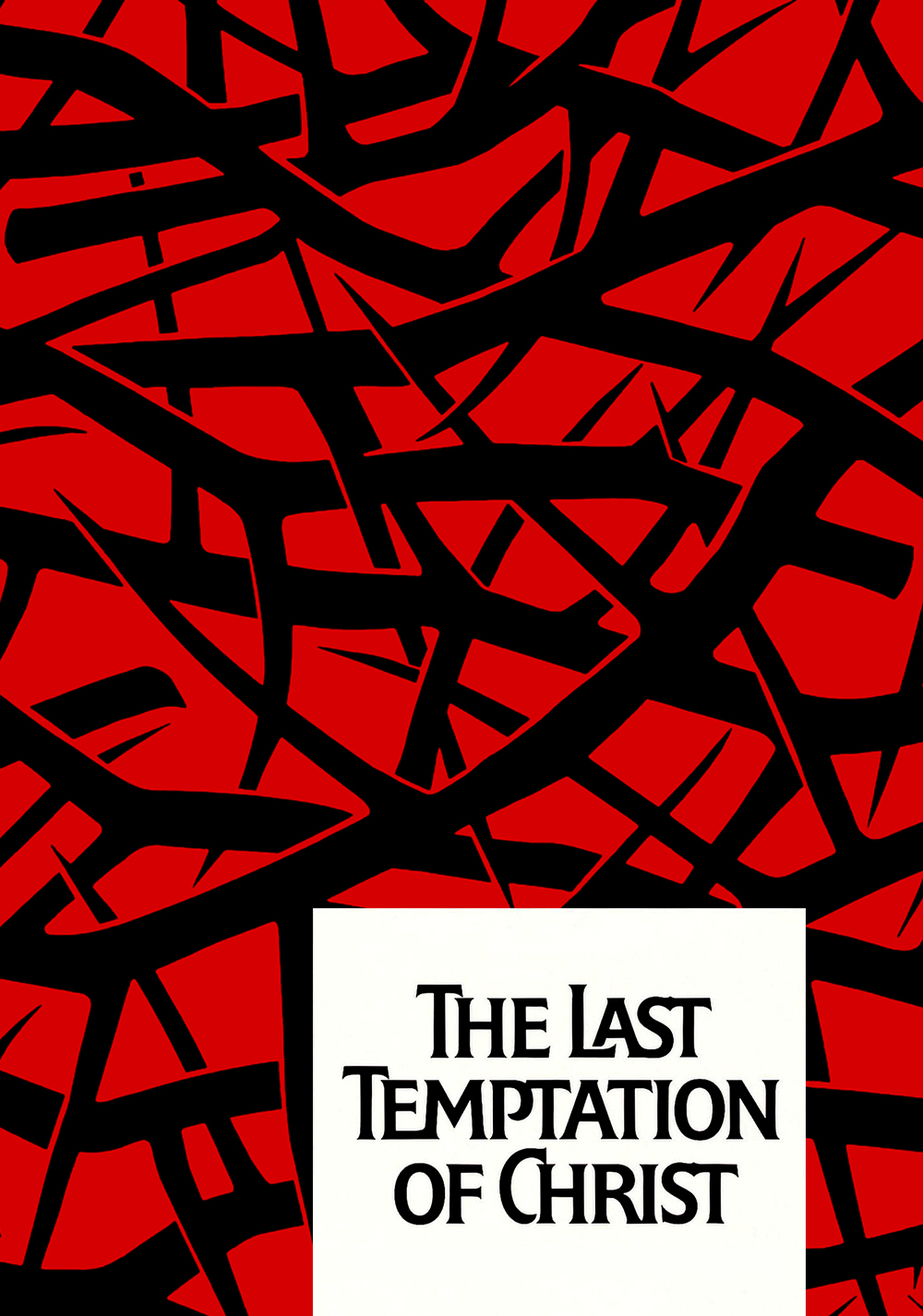
Like the original novel by Kazantzakis, The Last Temptation of Christ is based on the life of Jesus Christ of Nazareth (who obviously needs no introduction as a character, regardless of what one believes), and deconstructs him from being the entirely pure, tranquil figure that he has come to be seen, and rather as someone who was also a victim of temptation, rage and lust. The majority of the film chronicles events that correlate almost exactly with the events described in the Gospels, such as the various miracles performed by Christ, as well as his relationship with his apostles and the army of dedicated disciples that he amasses as he develops into the Messiah, sent to bring salvation to the world. The climax of the film deviates heavily from the popular version of Jesus’ life, as he is shown to be saved from crucifixion at the last minute, and enters into a life of mere mortality, living as a normal man with wives and children, and a peaceful but inherently sinful life, filled with mortal vices and temptations. The film deconstructs the story of Jesus Christ and presents him as someone who may have been the Son of God and the Messiah sent to save the souls of humanity, but also as an impure individual capable of violence, anger, and lustful thoughts. It takes some peculiar and controversial turns in telling this story, and despite attempting to rewrite the story through the counterfactual narrative, it still retains the truthfulness of the basic story, perhaps not in how it presents Jesus Christ, but in the way in which it displays the mortal laws that have since governed much of the Christian world, millennia later.
Martin Scorsese is obviously considered one of the foremost filmmakers of his generation, know for the exceptional quality of his work and his ability to appeal to both mainstream audiences and arthouse devotees. Critics adore him, and the public worships him as a proverbial messiah of filmmaking himself (whether or not one believes this to be true is not important, as Scorsese’s status speaks directly to his enduring legacy of great filmmaking). The Last Temptation of Christ is one of his most personal films, if not the film that speaks directly to his personal life. Personally, I found Scorsese to be the most authentic and brilliant when his films tackle the concept of faith and reflect the filmmaker’s own challenges with religion, how his strict Catholic upbringing is a constant influence on his filmmaking, with much of his work clearly displaying carnal, hedonistic existence, which we can even state were informed by Scorsese’s own foray into a life of debauchery in the 1970s as he struggled with his own personal demons. It is upon considering the interplay between these two aspects of Scorsese’s creative and personal life that one can begin to understand why The Last Temptation of Christ is a film that polarized critics and audiences alike, as it was far too raw and visceral to be compared to more comforting and conventional representations of the trials and tribulations of Jesus Christ, and it is a film that challenges what is considered to be sacred truths. I’ll speak about this precise aspect of this film a bit later on, because despite being extremely important, the intentions and message of a film can only be conveyed well through the film itself, so we have to look at the tangible aspects of the film and the story before we can even begin to consider the metaphysical aspects.
Willem Dafoe is such an effortlessly brilliant actor, one of the rare performers who is able to oscillate between memorable supporting performances, having carved out a niche position for himself as one of the most enduring character actors of his generation, as well as being able to command the screen when he is given the occasional leading role, such as in the case of The Last Temptation of Christ. Chillingly brilliant as the titular historical figure, Dafoe gives a performance that is very different from other cinematic renderings of Jesus Christ, while still keeping to the same general spirit of the character so as not to deviate from the central story too much, which would have resulted in detachment from reality. Dafoe’s Jesus Christ is uncanny, an unsettlingly familiar version of an impenetrably famous historical figure. Dafoe does exceptionally well in conveying both facets of the character – the savior, preaching love and forgiveness and leading his proverbial flock, and as the uncertain man struggling with temptation and undergoing a crisis of faith. It is perhaps Dafoe’s greatest leading performance, playing Jesus Christ as someone who is deeply flawed and often struggles to overcome his demons, both literally and metaphorically. Dafoe’s humanization of Jesus is almost unbearably complex, and he carries this film so well, it almost compensates for the other weaker performances around him (particularly an uncharacteristically mediocre Harvey Keitel, who seemingly sleepwalks through his performance as Judas Iscariot, consistently failing to reach the true complexities of the characters, as well as Barbara Hershey’s performance as Mary Magdalene, who is not developed as well as other characters are). I must mention two very good performances in The Last Temptation of Christ other than Dafoe’s incredible portrayal of Jesus Christ – Harry Dean Stanton (who I consistently praise as the greatest character actor of all time) as Saul, who is later reborn as Paul, as well as David Bowie in a one-scene performance as Pontius Pilate, playing the historical figure as being far more sympathetic and complex than he is otherwise shown, and rather than being a malevolent and cruel Roman official, he shows some form of sympathy (but obviously not enough to alter the course of the narrative).
Honestly, as a film, The Last Temptation of Christ is…unremarkable. If you remove the counterfactual narrative and the way in which this story is conveyed, it just becomes a standard and conventional Biblical narrative that is far more bleak and hopeless than the more comforting films that we have been subjected to before. Luckily, there is far more to The Last Temptation of Christ than initially meets the eye, and I alluded to this film as a great example of postmodern filmmaking – and while it may not be absolutely over throughout the film, it still exists in a multitude of ways. This is precisely where the comparisons to the work of Dambudzo Marechera (and other postmodern writers) becomes very important, as it speaks directly to the nature of The Last Temptation of Christ. There are a variety of postmodern elements present in this film, and while the popular Pynchonian and Warholesque conception of postmodernism advocates a more playful and almost parodic approach to the story, The Last Temptation of Christ takes a far more bleak approach.
The Last Temptation of Christ is what we can consider as being part of the Menippean satire genre of postmodernism (do not misinterpret the word “satire”, as there is absolutely nothing comedic about The Last Temptation of Christ, but rather the way in which it looks at society). A Menippean satire is a form of critique against particular mental attitudes and social norms, and The Last Temptation of Christ looks at Israel as an unforgiving, harsh landscape within which the central figure struggles to survive, both physically and mentally. Much like in the work of Franz Kafka, and especially notable in the aforementioned The House of Hunger, the mentality of the central character is foregrounded, and their personal struggles with mental decay are reflective of the decay of the society around them. It is truly contentious to consider Jesus as being mentally unstable in some way, but as The Last Temptation of Christ implies, it was the result of his mortal body’s interplay with his celestial mind.
Moreover, The Last Temptation of Christ shows the carnivalesque nature of society in a way that is horribly grotesque, with this film merging the sacred and the profane to tell its story in a way that is visceral and difficult to watch, with everything that is considered to be holy and unimpeachable being questioned and corrupted to an extent. The Last Temptation of Christ is populated by many awful individuals acting in ways that are immoral and unethical, and the metanarrative of “good conquers evil” is rendered redundant by this film. I assume many will take offense to the image of a vengeful Jesus Christ wielding an ax and choosing violence over love in the pursuit of peace, and it is undeniably contentious and controversial, but still a fascinating perspective on the life of Jesus Christ and the society that existed around him. The corporeality of this film – the way in which the brutal violence adds indelible stains and wounds to the characters – makes it truly violent and challenging viewing. This all works together in making The Last Temptation of Christ a truly subversive portrayal of a story that has become so widely-known and seen as fact, whereby it questions the nature of what is real and what is fiction, and how such a challenging portrayal of something considered to be the truth can lead to existential ponderings.
Jean-François Lyotard defined postmodernism as “incredulity towards metanarratives”, and there certainly is not any metanarrative bigger than that of religion. The Last Temptation of Christ challenges that notion and creates a truly iconoclastic work, a film that is provocative and controversial. Martin Scorsese made a tremendous film, and while it may not be a soaring triumph like many of his previous and subsequent masterpieces, The Last Temptation of Christ is still an incredible film, featuring Willem Dafoe as one of the most honest and brutal cinematic incarnations of Jesus Christ, and a story that challenges everything that is considered sacred. Religion is an unbelievably trick subject to convey on screen, and The Last Temptation of Christ is not undeserving of its controversy. I just think it is important to look beyond that controversy and see the true subversive brilliance of this film that dares to look at an alternative reality where the metanarrative of God does not actually exist, and how religion and faith can sometimes lead to even bigger crises of identity. It is a complex film and one without answers, but it is still an extraordinary experience, and certainly, one of the best Biblical epics to ever have been made, precisely because it challenges the very institution that bore it. Truly riveting, essential and unbelievably difficult viewing.

 The Postmodern Pelican